Blog
Beyond compliance: the ESPR era
AnchorPass provides seamless technological solutions to help manufacturers comply with the EU's new ESPR digital passport mandates without disrupting production lines.
Read more

<a href="https://www.7gr.it/">Sevengrams (7Gr.)</a>, a specialty coffee roaster, integrated the <b>AnchorPass</b> platform for the adoption of the Digital Product Passport (DPP). The implementation enabled supply chain traceability on a distributed ledger (blockchain), proactive alignment with European sustainability directives, and optimization of informative engagement with the final consumer.
Founded in Milan in 2009, Sevengrams operates in the artisanal roasting and technical training sector. Through the brands 7Gr. and Lot Zero, the company manages complex supply chains that require the monitoring of rigorous quality parameters throughout the entire production cycle, from origin to distribution.
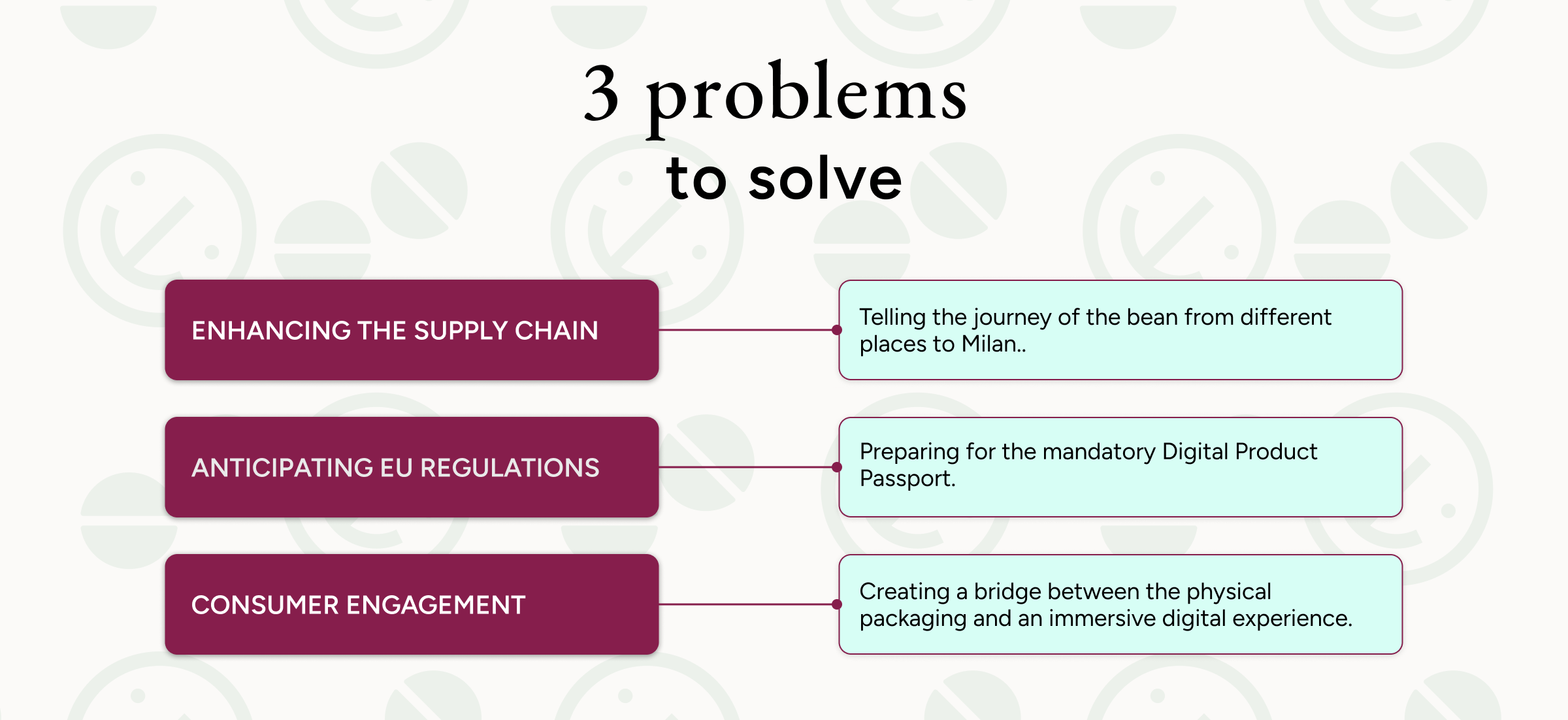
In the high-end coffee market, product value is dependent on the transparency of technical data (altitude, processing methods, roasting profiles). Sevengrams identified three strategic objectives:
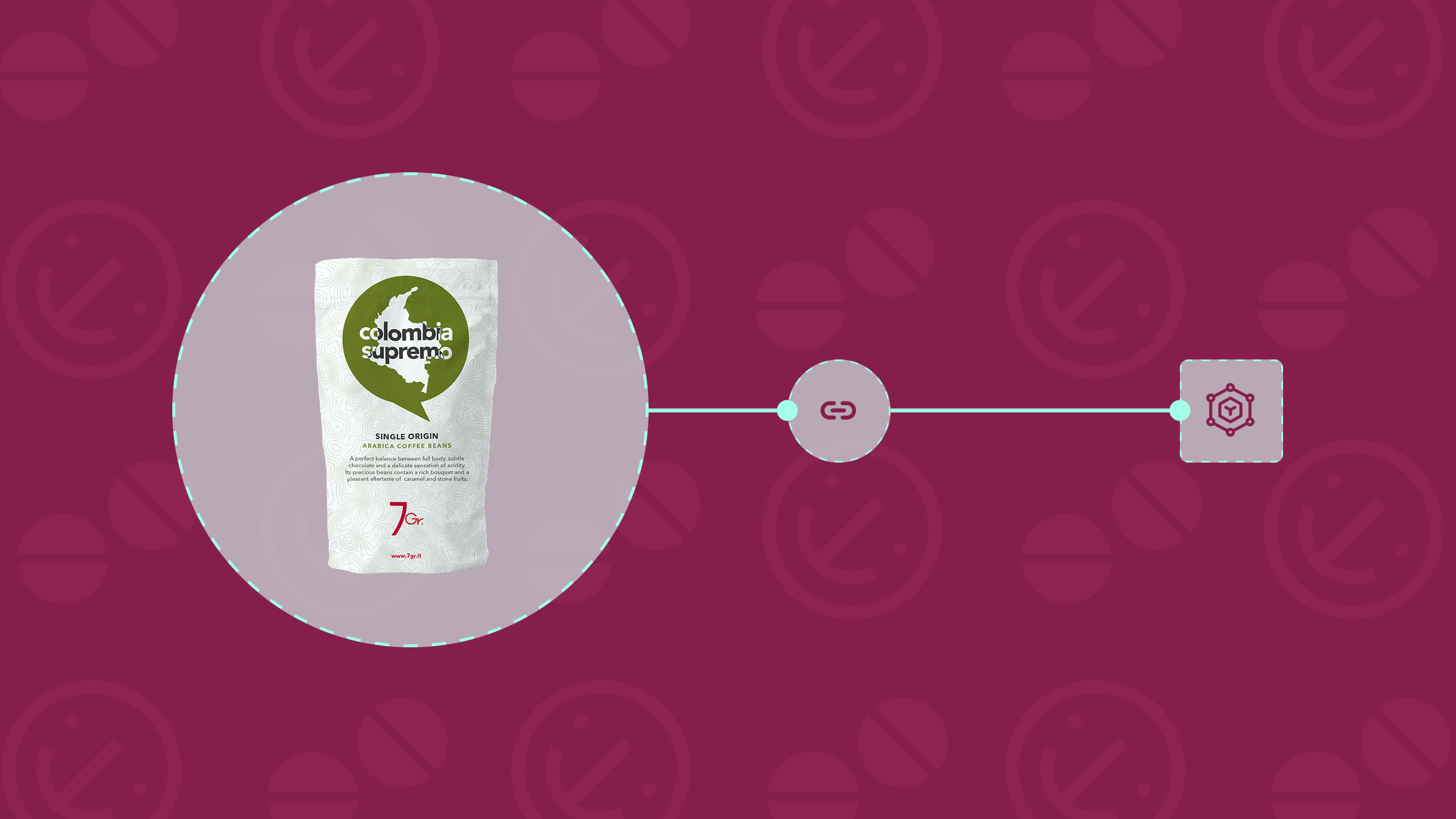
The AnchorPass platform was used to organize all information related to the coffee's journey in a simple and intuitive way. <b>Without the need for advanced IT skills, Sevengrams was able to build a tailor-made system to describe every single production batch.
</b>
The system automatically creates a genuine digital "identity card" for each batch. All entered information—such as the geographical location of the plantations, ethical certifications, and sustainability data—is securely saved and protected by technology that guarantees its authenticity and impossibility of alteration over time.
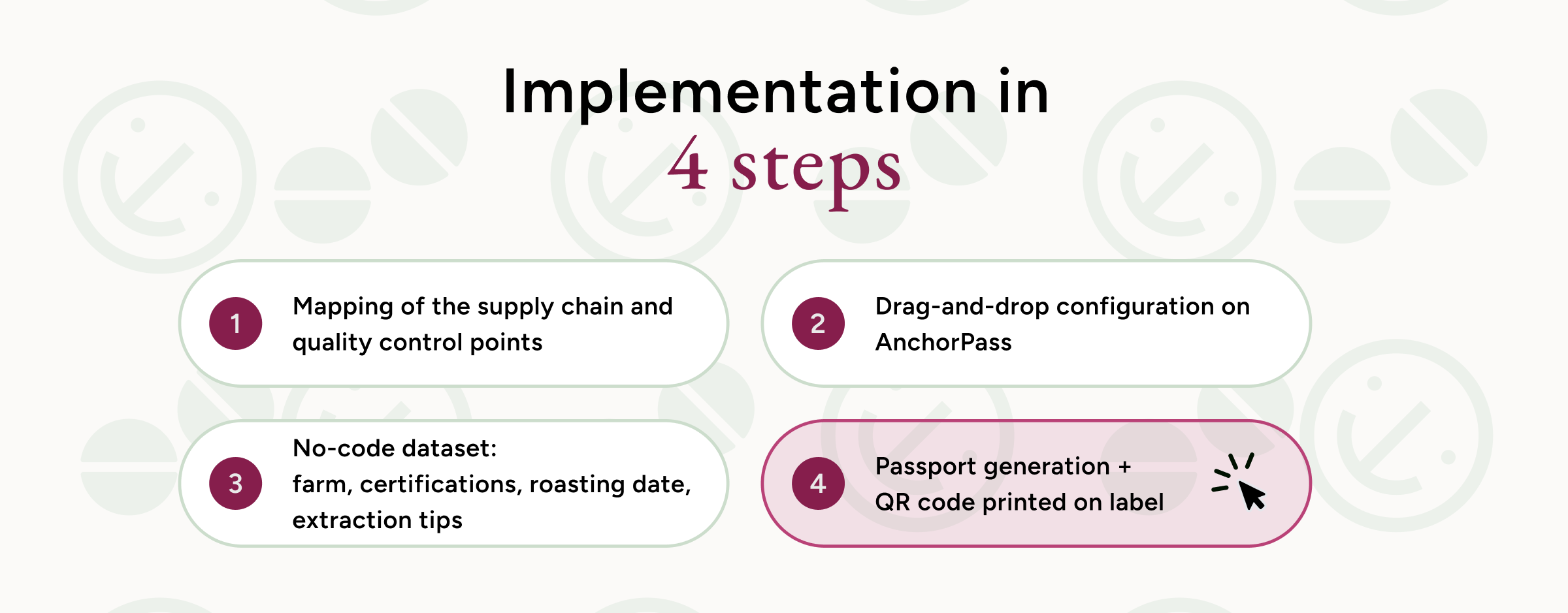
To translate these objectives into operational reality, the project followed a structured phased roadmap, moving from fieldwork and data collection to technological integration on the finished product. The no-code approach of AnchorPass allowed the entire supply chain to be digitalized in an agile manner, structuring the key steps as follows:
The adoption of the Digital Product Passport generated an immediate positive impact, transforming transparency into a concrete competitive advantage. In addition to ensuring maximum data security, the solution improved internal efficiency and redefined the relationship with the end customer through multiple benefits:
The success of this project demonstrates how technological innovation can blend seamlessly with the tradition of artisanal coffee roasting. Thanks to AnchorPass, Sevengrams has not only anticipated future European regulatory mandates but has also built a bidirectional, transparent channel of trust with the consumer. This pioneering approach sets a new benchmark in the specialty coffee industry, where a product's value is finally certified and narrated through every single bean.
AnchorPass provides seamless technological solutions to help manufacturers comply with the EU's new ESPR digital passport mandates without disrupting production lines.
Implementing AI in the Digital Product Passport without a verification architecture creates 'delegation without verification,' risking compliance errors, greenwashing, and false DPPs.
We are

AnchorPass is the dedicated Digital Product Passport solution from Mangrovia, a leader in enterprise-grade digital transformation. Visit our website!
Newsletter
Stay up to date

Follow us

