Blog
Beyond compliance: the ESPR era
AnchorPass provides seamless technological solutions to help manufacturers comply with the EU's new ESPR digital passport mandates without disrupting production lines.
Read more
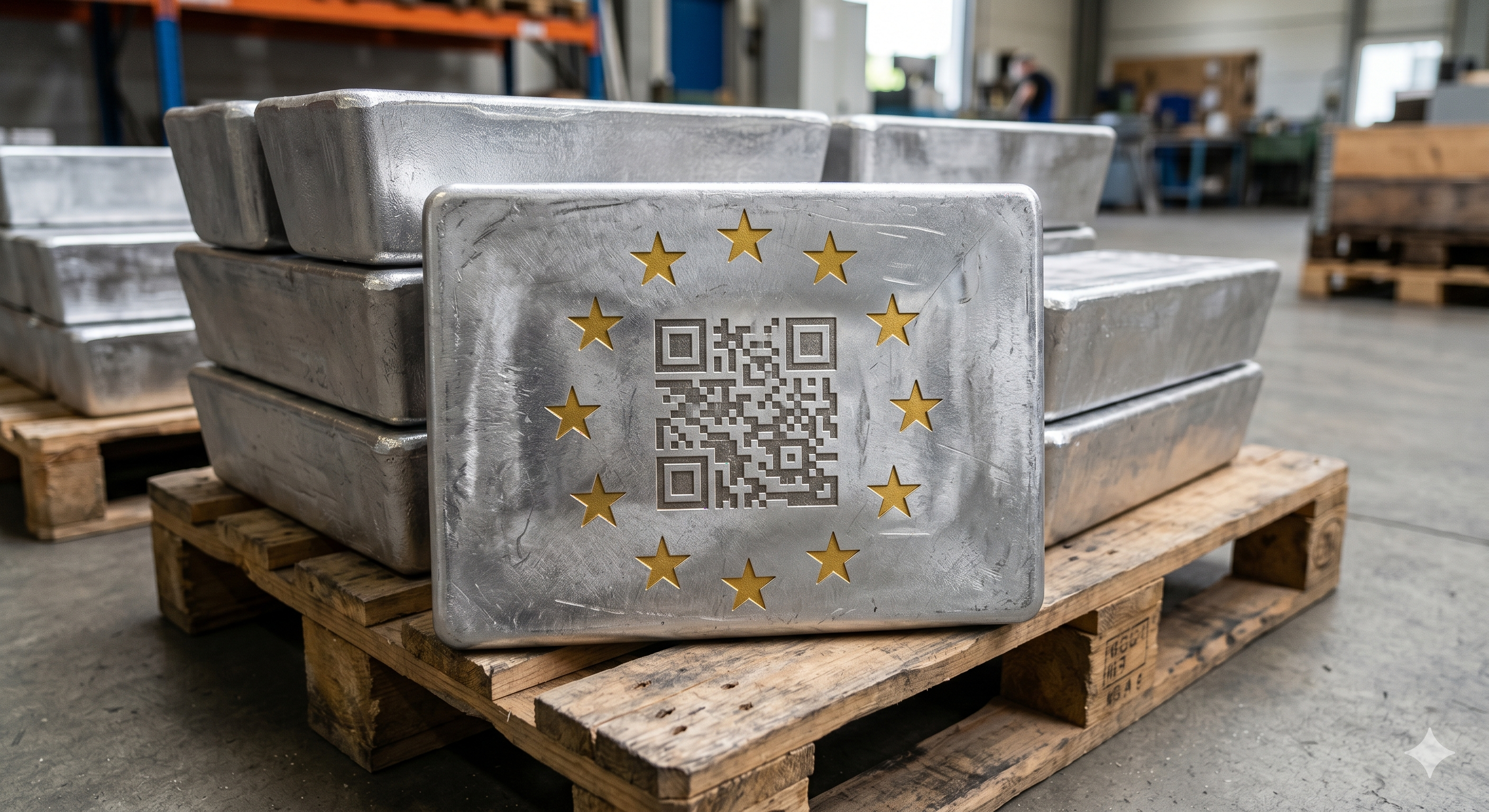
When discussing the transition to a circular economy and the incoming European mandates, consumer-facing sectors like textiles and electronics often dominate the headlines. However, the backbone of the European economy lies in its heavy industry.
The European Commission has made it clear that the transition to mandatory supply chain transparency spares no sector. In a major regulatory milestone this spring, <b>the EU officially advanced the framework for implementing the Digital Product Passport (DPP) in the iron and steel industries.</b>
For manufacturers, suppliers, and industrial stakeholders, the grace period is officially ending. The era of opaque B2B supply chains is giving way to an era of mandatory, verified data sharing.
According to the <a href="https://susproc.jrc.ec.europa.eu/product-bureau/product-groups/642/documents">official working documents released on the JRC Product Bureau portal</a>, the Commission is actively defining the granular technical requirements for heavy metals. Key deliverables currently under stakeholder review include:
These documents represent the blueprint for how the steel industry will operate in the European market by the end of the decade.
Implementing a Digital Product Passport for a steel coil or an iron beam is vastly more complex than doing so for a t-shirt. <b>The heavy industry supply chain is highly fragmented, involving global mining operations, massive smelting facilities, and complex logistics networks</b> before a product even reaches a secondary manufacturer.
Historically, data regarding material origin, chemical composition, and carbon footprint has been trapped in isolated "silos"—<b>static PDFs, proprietary ERP systems, or offline spreadsheets.</b>
Under the incoming ESPR rules, these silos become a critical liability.
<b>The DPP requires interoperability.</b>
A steel manufacturer must be able to securely receive verified data from the mine, append their own processing and LCA data, and seamlessly pass that digital asset down the chain to the automotive or construction companies purchasing their materials.
The sheer volume of data required by the JRC's preparatory studies means that manual compliance is no longer a viable strategy. Heavy industry players must begin building the digital infrastructure to support these mandates today.
At <a href="https://mangrovia.io/">Mangrovia</a>, we recognize that for industries like iron and steel, the Digital Product Passport must be built on a foundation of absolute trust and scalable technology.
Our infrastructure is designed to solve the complexity of deep B2B supply chains, allowing companies to:
The latest publications from the European Commission are not just draft proposals; they are a clear roadmap.
<b>The Digital Product Passport is coming to heavy industry. The companies that adopt the right technological infrastructure now will not only ensure their compliance but will secure a definitive competitive advantage in the new, data-driven industrial economy.</b>
<em>To review the official draft preparatory studies, LCA analyses, and the ongoing stakeholder consultations, visit the <a href="https://susproc.jrc.ec.europa.eu/product-bureau/product-groups/642/documents">European Commission JRC Product Bureau - iron and steel sector page.</a></em>
AnchorPass provides seamless technological solutions to help manufacturers comply with the EU's new ESPR digital passport mandates without disrupting production lines.
Implementing AI in the Digital Product Passport without a verification architecture creates 'delegation without verification,' risking compliance errors, greenwashing, and false DPPs.
We are

AnchorPass is the dedicated Digital Product Passport solution from Mangrovia, a leader in enterprise-grade digital transformation. Visit our website!
Newsletter
Stay up to date

Follow us

